

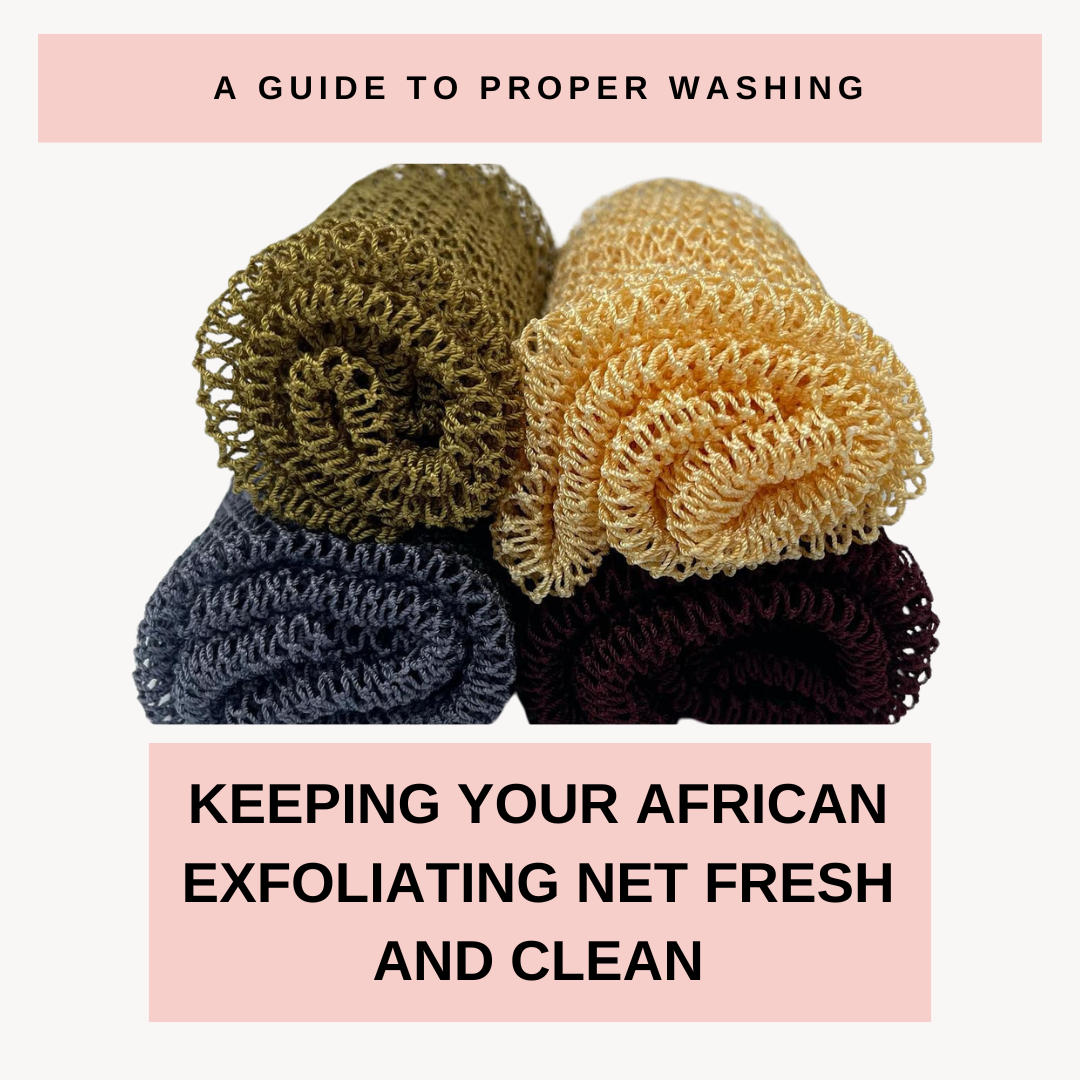

How do you clean an African net sponge?
You clean an African net sponge by rinsing it thoroughly with warm water after every shower, or hand-washing it with gentle soap and warm water once a week. For a deeper clean, soak it in warm water with a splash of white vinegar before rinsing it thoroughly and hanging it up to air dry.
Cleaning your net properly keeps soap residue from building up in the woven knots. Here is the exact step-by-step method to maintain your sponge:
- Rinse immediately: After showering, hold the net under warm running water to flush out all remaining soap lather and loosened skin particles.
- Soak in mild soap: Fill a basin with warm water and add a few drops of mild liquid soap or body wash. Submerge the net completely.
- Agitate the mesh: Work the net back and forth in the water, gently rubbing the material against itself to dislodge oils and soap scum.
- Flush with clean water: Rinse the net under fresh running water until no bubbles or slippery residue remain in the weave.
- Air dry thoroughly: Shake off excess water drops and hang the net by its ends in a well-ventilated space away from standing humidity.
Taking these quick actions every week preserves the texture of your African Exfoliating Net. Regular rinsing stops soap film from dulling the surface friction of the nylon knots.
Can you put an African net in the washing machine?
Yes, you can put an African net in the washing machine on a gentle cycle with cold or warm water. Placing the net inside a mesh laundry bag prevents the long nylon strands from tangling around other clothing items, zippers, or the washing machine agitator during the wash cycle.
Machine washing provides an effortless way to deep clean your net alongside your regular laundry loads. Use your standard mild laundry detergent, but avoid adding chlorine bleach or fabric softeners. Fabric softeners coat the synthetic fibers, leaving a waxy coating that reduces the mesh's physical exfoliation ability.
Always double-check that the mesh bag is securely zipped before starting the cycle. Once the wash cycle finishes, immediately remove the net from the machine and hang it to dry rather than leaving it damp in the drum.
How often should you wash your African net?
You should rinse your African net thoroughly after every single use and perform a deeper cleaning once a week. Weekly cleaning removes accumulated body oils, soap scum, and shed skin debris, keeping the nylon mesh fresh and textured over years of daily shower use.
Establishing a simple routine prevents buildup long before it becomes visible. Following a set schedule keeps your bath tools clean and ready for daily use without requiring complex care steps.
| Routine Action | Recommended Frequency | Method |
|---|---|---|
| Rinse & Drain | After every shower | Warm water flush and vigorous shake |
| Deep Wash | Once a week | Hand wash with soap or machine delicate cycle |
| Vinegar Soak | Every 2 to 4 weeks | 15-minute soak in water and white vinegar |
Sticking to this quick care routine ensures your bath tools remain fresh. Taking care of your net takes less than a minute during your weekly cleaning routine.

How should you dry an African net?
You should dry an African net by shaking out excess water and hanging it completely unfurled in a well-ventilated space. Because the porous nylon material does not absorb water inside its fibers, air circulating through the open weave dries the entire net within a few hours.
Avoid leaving your net bunched up in a ball or sitting on a damp shower ledge. The American Academy of Dermatology notes that bath tools should be allowed to dry thoroughly between uses. Storing bath tools in humid, closed spaces hinders effective drying.
Hanging the net by one end allows gravity and airflow to clear moisture rapidly. If you travel or have a compact shower, a smaller weave from our full collection of African exfoliating nets dries quickly even in tight, enclosed spaces like hotel bathrooms.
How long does an African net last?
An African net typically lasts two years or more when cleaned weekly and allowed to air dry completely. The durable, knotted nylon construction resists tearing, fraying, and structural degradation, allowing the sponge to maintain its distinctive exfoliating texture far longer than cotton washcloths or natural loofahs.
Unlike natural plant loofahs that soften and break down after a month of immersion, high-quality synthetic mesh stays firm and intact. The knotted weave does not unravel during vigorous daily scrubbing or stretching across your back. Our full comparison of the African net versus the loofah breaks down the lifespan and cost difference in detail.
Because one single net serves you reliably over hundreds of showers, it offers exceptional practical utility. Keeping an African Exfoliating Net Bundle on hand ensures every bathroom in your household enjoys long-lasting exfoliation without frequent trips to replace worn bath accessories.
When should you replace your African net?
You should replace your African net when the knots become visibly frayed, the elasticity loosens significantly, or persistent odors remain after washing. While the nylon material is built to last, wear over two or more years eventually reduces its ability to exfoliate skin effectively.
Inspect your net periodically for signs of physical aging. If the center of the net feels soft and smooth rather than grippy and textured, the knots have flattened from friction over time. Flattened mesh cannot sweep away dead surface cells as efficiently as new knotted nylon.
If a deep soak in white vinegar fails to remove a lingering, stale smell, it is time for a fresh start. Swapping out an old tool for a new African Exfoliating Net restores the crisp, satisfying tactile feedback your shower routine requires.
Why does my African net smell?
Your African net smells when lingering soap scum, body oils, and shed skin cells remain trapped in the mesh while sitting in a humid environment. Even though nylon dries fast, leaving a soapy net bunched up on a wet tile floor prevents air from reaching the inner folds.
Rinsing soap completely out of the mesh after every shower stops organic residues from collecting inside the knots. When soap film accumulates alongside moisture, it creates a musty odor that transfers back to your hands and body.
Always flush the net with clean water until the runoff is clear, then hang it wide open. Giving the net ample breathing room in circulating air keeps it smelling completely neutral shower after shower. If your skin reacts easily to texture and you are washing more gently as a result, our guide to using an African net with keratosis pilaris covers the light-pressure technique.
FAQ
Can you boil an African net?
No, you should not boil an African net. High heat from boiling water can melt, warp, or weaken the synthetic nylon fibers, permanently ruining the knotted texture. Stick to warm water hand-washing or machine washing on a delicate cycle instead.
Can you put an African net in the dryer?
No, you should not put an African net in the clothes dryer. High tumble heat degrades synthetic nylon, causing the mesh to warp, shrink, or lose its elasticity. Because the porous net air-dries rapidly on a hook, machine drying is completely unnecessary.
Is it normal for the colour to fade?
Yes, mild color fading is completely normal over months of exposure to warm water, body washes, and sunlight. Color softening does not affect the physical durability or exfoliating texture of the nylon mesh, which continues working effectively regardless of shade changes.
How do you clean a net that already smells?
To clean a net that already smells, soak it in a basin of warm water mixed with one cup of white vinegar for 15 to 30 minutes. Rinse thoroughly with fresh water, hand wash with mild soap, and hang it in open air to dry completely.

